

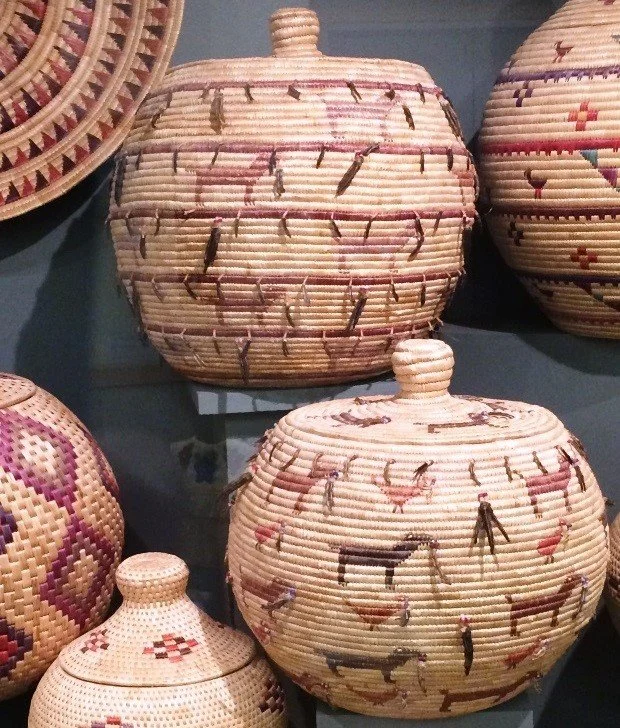
Use of Inedible Bird Parts in Authentic Native Handicrafts for Sale
Only Alaska Natives may sell or re-sell an “authentic native article of handicraft or clothing” that contains an inedible byproduct of a bird taken for food during the Alaska migratory bird subsistence harvest season. Eligibility can be shown by Tribal Enrollment Card, Bureau of Indian Affairs card, or membership in the Silver Hand program.
All sales and transportation of sold items are restricted to within the United States.
Each sold item must be accompanied by either a certification (FWS Form 3-2484) signed by the artist or a Silver Hand insignia.
Purchasers must retain this documentation and produce it upon the request of a Law Enforcement Officer. For more information see “Quick Links” section at: https://www.fws.gov/office/alaska-migratory-birds/alaska-migratory-bird-co-management-council
“Sales by consignment” are allowed. Each consigned item must be accompanied by either a certification (FWS Form 3-2484) signed by the artist or a Silver Hand insignia. All consignees, sellers, and purchasers must retain this documentation with each item and produce it upon the request of a Law Enforcement Officer. All consignment sales are restricted to within the United States.
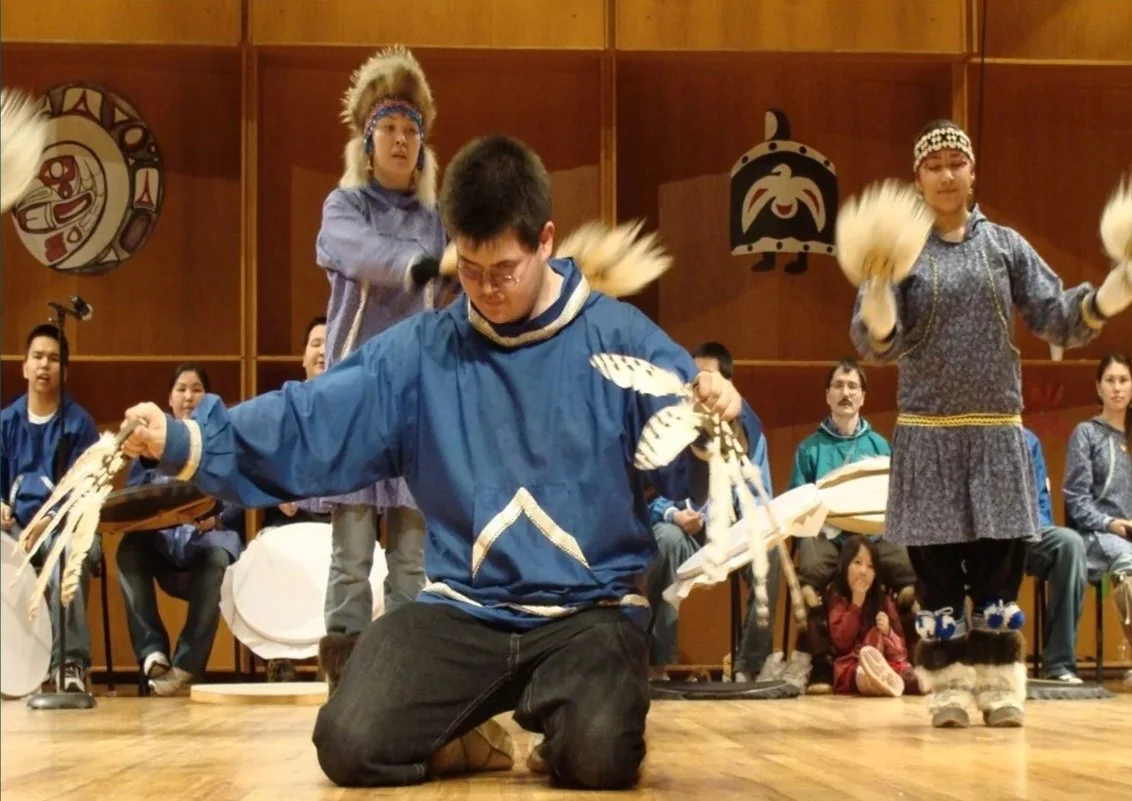
Alaska Native Dance using migratory bird feathers
-
Effective as of 8/23/2017
-
Effective as of 8/23/2017
Use and Possession of Migratory Birds
You may not sell, offer for sale, purchase, or offer to purchase migratory birds, their parts, or their eggs taken under these regulations, except as provided in this section.
-
Giving and receiving migratory birds. Under these regulations, you may take migratory birds for human consumption only. Harvest and possession of migratory birds must be conducted using nonwasteful taking. Edible meat of migratory birds may be given to immediate family members by eligible persons. Inedible byproducts of migratory birds taken for food may be used for other purposes, except that taxidermy is prohibited, and these byproducts may only be given to other eligible persons or Alaska Natives.
Authentic native articles of handicraft or clothing (see page 34).
-
Eligible persons - You may take birds for human consumption only. Harvest and possession of migratory birds must be done using non-wasteful taking. Non-edible byproducts of birds taken for food may be used for other purposes, except that taxidermy is not allowed.
-
Non-eligible persons - You may receive portions of birds or their eggs not kept for human consumption from eligible persons only if you have a valid U.S. Fish & Wildlife Service permit for scientific research or education.
Alaska Native Sale of Migratory Bird Handicrafts Final Rule
Questions & Answers
-
Regulations (50 CFR 92.6) previously prohibited the sale or purchase of migratory birds, their parts, or their egg(s) taken under the migratory bird subsistence harvest in Alaska.
Native artisans in Kodiak submitted a request to the Alaska Migratory Bird Co-management Council to allow the inedible parts from birds taken for food during the subsistence hunt, to be incorporated into handicrafts for sale.
The Alaska Migratory Bird Co-management Council developed a proposal to legalize the sale of handicrafts that incorporate the inedible parts of migratory birds taken for food during the spring/summer Alaska subsistence harvest season.
-
The changes were developed by the Alaska Migratory Bird Co-management Council, whose members include a representative from the U.S. Fish and Wildlife Service, the Alaska Department of Fish and Game, and ten tribal representatives.
The Co-management Council’s proposed changes have been presented to the Pacific Flyway Council and to the Service’s Regulations Committee.
The rule has been approved by the Director of the U.S. Fish and Wildlife Service.
-
The rule includes a provision to allow the sale, including consignment sales, of handicrafts that contain the inedible parts of birds taken for food during the Alaska spring and summer subsistence harvest and definitions for authentic native article of handicraft or clothing, migratory birds authorized for use in handicrafts or clothing, and sales by consignment
-
Consistent with Article 11(4)(b) of the Protocol between the United States and Canada, only Alaska Natives would be eligible to sell handicrafts or articles of clothing that incorporate the inedible parts of migratory birds. Eligibility can be shown by a tribal enrollment card, Bureau of Indian Affairs card, or membership in the Silver Hand program.
The Silver Hand program is a state program that helps Alaska Native artists promote their work and certifies for consumers that artwork with a silver hand insignia was made by an Alaska Native artist.
-
Limited sale of Alaska Native-made handicrafts containing inedible parts of migratory birds taken during the subsistence season is not expected to significantly increase harvest rates or have a significant impact to bird species or the environment.
Alaska subsistence harvest rates have continued to decline over the past years, similarly to declining sport-hunting harvest rates in Alaska during the past several years.
Handicraft items must be created by hand by an Alaska Native person, so there would be limited producers of handicraft. Product sales will be limited to being conducted by Alaska Native artists only or their consignees.
The market for traditional Alaska Native art is limited and not a major item of commerce, especially with restrictions in international sale. Lastly, continued monitoring of the subsistence harvest will enable tracking trends in harvest levels.
Only these bird species can be used in handicrafts
White-winged Scoter
Barrow’s Goldeneye
Hooded Merganser
Pacific Loon
Double-crested Cormorant
Black Oystercatcher
Lesser Yellowlegs
Semipalmated Sandpiper
Western Sandpiper
Wilson’s Snipe
Bonaparte’s Gull
Mew Gull
Red-legged Kittiwake
Arctic Tern
Black Guillemot
Cassin’s Auklet
Great Horned Owl
Common Loon
Tundra Swan
Blue-winged Teal
Redhead
Ring-necked Duck
Greater Scaup
Lesser Scaup
King Eider
Common Eider
Surf Scoter

State-Wide Public Meetings
Attend our public meetings to be be in-the-know of regulatory & non-regulatory matters.
-
The annual statewide Spring meeting allows Council members the opportunity to consider and take action on any proposed migratory bird regulatory proposals that have been submitted during the open proposal period (November 1-December 15 annually).
Other business during this meeting may include the sharing of time-sensitive information relevant to the upcoming spring-summer harvest season for that year.
-
The annual statewide Fall meeting focuses on sharing new information and environmental observations from the Native Caucus, hearing technical reports on migratory bird research from the partner organizations, discussing any ideas for new regulations or amendments to existing regulations, and learning the latest results from the summer aerial and ground-based population surveys.
Reference Library
Stay updated & informed with Past State-Wide Public Meeting Transcripts, Treaties, & Historical Documents that affect Alaskan Migratory Bird Subsistence, Native Handicraft Regs, & more.
Do The Regulations Affect You?
Our Overview Page offers summaries of:
What the Reg Book is for.
Legislative History.
Definitions.
Use & Possession.
Eligibility.
Special Requirements.
& Required Licensing or Stamps.
